Measuring GEO & AEO success – why UX, content and trust matter more than ever.
Topic
Artificial Intelligence6 mins read
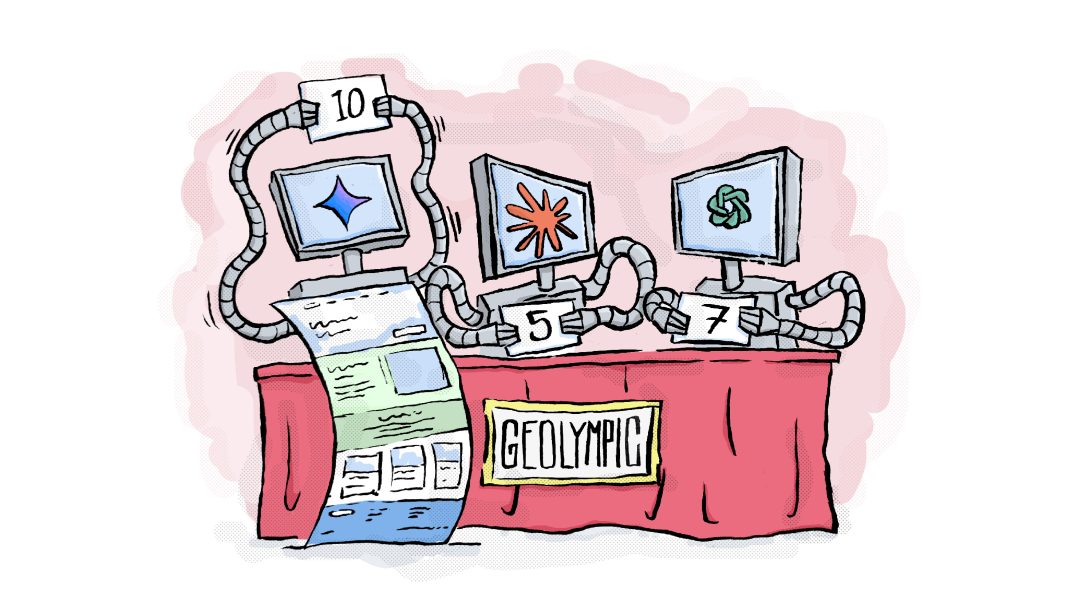
Anyone can claim to optimise for AI search. Very few can tell you whether it’s actually working.
As AI platforms reshape how audiences discover information, a new vocabulary has emerged around visibility, particularly GEO, AEO, and AI citations. Businesses are optimising for AI citations by investing in:
- Content restructuring: rewriting and reorganising pages so AI systems can extract clear, accurate answers.
- Schema implementation: the addition of structured code that helps AI platforms understand what a page is about.
- Entity clarity: ensuring that your brand, products and expertise are defined and consistent enough for AI to reference with confidence.
But without a coherent measurement framework, much of that activity amounts to educated guesswork.
The brands that will win in AI search over the next three years won’t just be the ones that optimised earliest. They’ll be the ones that understood what success looked like and used the right tools to measure it.
What GEO and AEO success actually looks like.
Traditional SEO success is relatively straightforward to measure. Rankings improve. Organic traffic grows. Conversions follow. AI search visibility is less linear, and that distinction matters.
Success in GEO and AEO is demonstrated across four interconnected signals:
AI citations — whether your content is being referenced as a source within AI-generated responses on platforms like ChatGPT, Claude or Google’s AI Overviews.
Brand mentions in AI summaries — whether your brand name, positioning or expertise is surfaced as part of a generated answer, even without a direct link.
Assisted organic conversions — where AI-driven discovery initiates a journey that converts through organic search or direct visits. This is the channel most commonly misread in standard analytics, because the touchpoint is invisible unless you’re looking for it.
Branded search growth — an increase in users actively searching for your brand by name.
That last metric is particularly telling. Branded search growth is a lagging indicator of AI mention activity. When an AI platform references your brand in a response, users who trust that recommendation often search for you directly. A sustained upward trend in branded queries is one of the clearest signals that your AI visibility strategy is gaining traction, even before citation tracking confirms it.
Why UX and content quality are trust signals, not just experience metrics.
There is a tendency in AI search optimisation conversations to focus almost exclusively on structure — schema markup, heading hierarchies, entity definitions. These matter. But they don’t exist in isolation.
AI systems are trained on patterns. Those patterns include behavioural signals that reflect how users actually engage with content. Dwell time, engagement rate and page experience data are not just UX metrics. They are credibility signals that reinforce whether your content genuinely serves the intent behind a query.
A page with strong schema but poor engagement tells a conflicting story. High bounce rates suggest content that underdelivers on its promise. Slow load times signal technical indifference. AI systems, much like search engines before them, are becoming increasingly sophisticated at distinguishing between content that appears authoritative and content that actually is.
This is where full-service agency thinking has a distinct advantage. Optimising for AI visibility is not purely a technical or content exercise. It requires alignment across UX, design, performance, messaging and authority — the kind of coherence that is difficult to achieve in silos.
The reporting gap nobody is talking about.
Here is the uncomfortable reality facing most brands investing in AI search optimisation: it does not show up cleanly in standard analytics.
AI-driven discovery often leaves no direct referral trace. Users arrive through branded searches, direct visits or via organic queries that appear unrelated to AI activity. Without deliberate tracking architecture, the contribution of GEO and AEO to business growth remains largely invisible.
Closing that gap requires more than a standard GA4 dashboard. It requires monthly AI citation monitoring using tools such as Ahrefs and dedicated AI visibility trackers. It requires organic visibility benchmarking that separates AI-influenced traffic patterns from baseline fluctuations. It requires GA4 and GTM event tracking configured to capture assisted conversion pathways and engagement depth. And it requires custom report dashboards that translate raw data into strategic interpretation.
That last point is the critical one. Standard dashboards show outputs. They tell you what happened. They do not tell you why it happened, whether it represents progress, or what it means for the months ahead. AI visibility reporting is interpretive work. It requires benchmarking against your own historical performance, awareness of platform behaviour changes, and the ability to distinguish signal from noise.
This is not work that a standard monthly report can accommodate. It is ongoing, structured analysis and it is where the gap between businesses with expert support and those without becomes most apparent.
The compounding effect – why this all builds over time.
In a previous blog, we have argued that SEO, GEO and AEO are not competing disciplines. They are a stacking model, each layer strengthening the one beneath it.
That stacking has a compounding quality that is easy to underestimate in the early stages. Strong technical SEO improves crawlability and trust signals. GEO-focused content deepens topical authority and increases citation likelihood. AEO-structured pages improve extractability and direct answer inclusion. As each layer matures, the others become more effective.
Brands that invest in this model consistently, refining content, monitoring citation activity, improving UX, strengthening entity definitions, do not just accumulate rankings. They accumulate relevance. And in an AI-driven search environment, relevance is the currency that compounds most reliably.
Visibility is measurable, but only if you know what to measure.
AI search optimisation is no longer speculative. The platforms are established. The behaviours are observable. The signals are trackable. What remains scarce is the expertise to connect those signals into a coherent, strategic picture.
At Holdens, we work with brands to build that picture — combining technical SEO, GEO and AEO with AI citation tools and custom reporting to build a framework that makes AI visibility legible, measurable and commercially meaningful.
If you want to understand where your brand stands in AI search, and what it will take to improve it, let’s talk.
Other blogs

Category
AdvertisingTopic
Campaigns of the Month
10 mins read
Audio version available

Category
Agency NewsExperientialTopic
Agency News
2 mins read